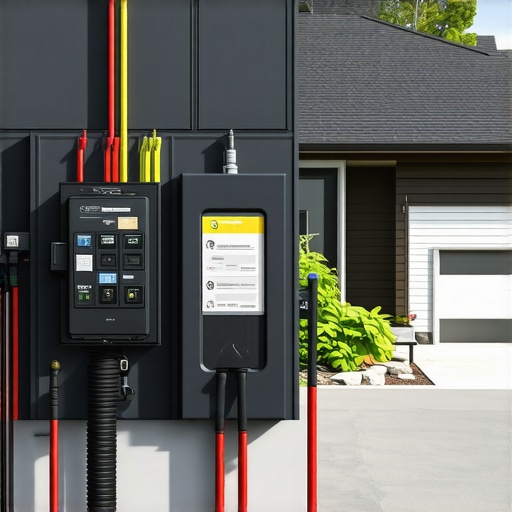

Panel Upgrade & Code Compliance: Ensuring Safe EV Charging at Home Today
I vividly remember the day my electric vehicle (EV) charger kept tripping the circuit breaker, leaving me stranded in my own driveway. Frustration bubbled up—why was this happening? It wasn’t until I dug deeper that I realized my electrical panel was simply not equipped for safe EV charging, exposing me to potential hazards and risking code violations. That lightbulb moment made me realize how common this problem is for many homeowners.
The Hidden Risks of Ignoring Your Panel’s Capacity
When I first installed my EV charger, I thought plugging in and charging overnight was straightforward. But as my charging needs grew, I noticed more frequent trips and flickering lights. It dawned on me that my electrical infrastructure might be outdated or underprepared. Ignoring this can lead to serious issues—overheating wires, electrical fires, and failing to meet local **code compliance** standards.
Surprisingly, a significant number of home chargers are installed without verifying if the panel can handle the load. According to the U.S. Fire Administration, electrical fires from faulty wiring or improper installations account for hundreds of residential fires annually. Ensuring your home’s electrical system is up to code isn’t just about avoiding fines; it’s about your safety and peace of mind.
So, what’s the fix? Today, we’ll explore how to properly upgrade your panel and ensure your EV charging setup is both safe and compliant. If you’ve ever faced the frustration of tripped breakers or worried about safety, stick around. I’ll share practical insights based on my experience and expert advice.
Is a Panel Upgrade Really Necessary for Safe EV Charging?
Early in my journey, I made the mistake of underestimating what a panel upgrade entails. I assumed plugging in a high-capacity charger was as simple as swapping out a socket. That’s a mistake many homeowners make, and it can be costly.
Upgrading your electrical panel isn’t just about adding more outlets. It’s about making sure the entire system can safely handle the electrical demand of fast charging without risking overloads or violations. To learn more about how to determine if your home needs this crucial step, check out our comprehensive guide on panel upgrades for EV chargers.
Assess Your Current Electrical Load
Start by understanding your home’s existing electrical capacity. Turn off all major appliances and turn on the main breaker. Use a multimeter or a clamp meter to measure the main service panel’s current load. If the reading approaches or exceeds 80% of your panel’s rated capacity, a load addition or upgrade is necessary. Remember, overloading can cause breakers to trip and pose fire risks. Personally, I once saw a panel nearing maximum capacity while trying to charge an EV, which immediately signaled the need for an upgrade. Use this step to identify if your system can handle additional loads.
Calculate Your Charging Needs
Determine the power requirements of your EV charger, typically listed in kilowatts (kW). For example, a 40A Level 2 charger at 240V draws about 9.6 kW. Compare this with your current panel capacity; if it surpasses 80%, plan an upgrade. I vividly recall consulting with an electrician who advised me that without proper calculation, I risked overloads. Accurate calculation ensures your panel can sustain your charging habits safely and avoid unnecessary disruptions.
Consult a Licensed Electrician
Avoid DIY upgrades; engaging a licensed electrician guarantees code compliance and safety. Request a detailed inspection of your electrical panel and a load calculation report. They will examine components like bus bars, breakers, and wiring for adequacy. I learned this the hard way when attempting a quick upgrade myself—resulting in code violations and safety hazards. Professionals also verify compliance with local regulations, crucial for peace of mind. Use this guide to ensure the electrician’s work adheres to mandated standards.
Plan Your Panel Upgrade Strategy
Based on the assessment, choose an upgrade route—adding a subpanel or replacing your main panel. For most homes, replacing the main panel with a higher amperage unit (e.g., 200A to 400A) provides future-proofing. An analogy is upgrading from a small garden hose to a fire hydrant; you need the right infrastructure to handle increased flow safely. I coordinated with my electrician to upgrade to a panel rated for 200A, which included new breaker slots and wiring. Always verify that your new panel meets all safety and code requirements.
Follow Proper Installation Procedures
This step is critical to ensure safety and compliance. The electrician will disconnect power, remove the old panel, and install the new one following manufacturer instructions and local codes. They will also upgrade grounding and bonding systems, essential for circuit safety. Remember, improper installation can lead to dangerous faults. A trusted electrician will adhere to code standards and best practices, preventing future hazards.
Verify and Test Your New System
After installation, conduct thorough testing. Turn on the main breaker and verify all circuits are energized. Use a multimeter to confirm correct voltage levels at outlets and specialized test equipment for breakers. Be vigilant for unusual noises, sparks, or smells. I once observed a subtle buzzing that turned out to be an improperly seated breaker—prompt detection avoided a potential fire. Document your setup and schedule professional testing periodically to maintain safety and ensure your EV charging remains reliable.
Many homeowners believe that simply installing an EV charger and ensuring basic wiring meets local codes is sufficient for safety and future-proofing. However, this oversimplification can lead to critical pitfalls. One of the most overlooked nuances is the misconception that code compliance is a one-time hurdle—once you’ve passed inspection, your system is set for years. In reality, codes evolve, and so should your electrical infrastructure. Regular assessments and upgrades are essential, especially as EV technology progresses. For instance, newer models demand higher amperage and dedicated circuits, which many homeowners fail to anticipate. This trap can cause slow charging or frequent breaker trips, risking damage and safety hazards.
**Avoid the Trap of Underestimating Load Calculations** is a common mistake. Many assume their existing panel can handle added loads without thorough calculations. But even a slight misjudgment can lead to overloads and fires. Experts recommend detailed load assessments, considering future needs, not just current requirements. Incorporating a certified electrician’s expertise ensures your setup can accommodate rapid charging speeds safely. I learned this the hard way when my initial installation failed to account for backup power systems, leading to compliance issues down the line.
Is Your System Truly Future-Proof and Code-Compliant?
This question is vital for discerning homeowners who want long-term safety and efficiency. Remember, code standards like the NEC (National Electrical Code) are updated regularly—most recently in 2023—integrating new risk assessments and safety protocols. Staying ahead means consulting updated guidelines and working with professionals who are well-versed in local amendments. For comprehensive planning, check out our detailed guide on upgrading panels for better EV charging performance and how to ensure you meet evolving standards.
**Beware of the Oversimplification of Troubleshooting** too. When an EV charger malfunctions, many attempt DIY fixes that can inadvertently violate code or worsen the problem. Specialized knowledge is necessary—not just for repair, but for diagnosing root causes like wiring degradation, grounding issues, or controller failures. Engaging a licensed electrician prevents costly errors and guarantees your system remains compliant with safety standards. For common mistakes and expert tips, see our resource on troubleshooting EV charger issues safely.
Finally, understanding that **not all panel upgrades are equal** is integral. Upgrading your electrical panel involves more than increasing amperage; it requires appropriate spacing, grounding, and adherence to local code amendments. Failing to consider these details can leave your home vulnerable. Proper planning, executed by qualified electricians, ensures your infrastructure is resilient and compliant. As I discovered, rushing a panel upgrade without proper load calculation and code adherence can result in costly rework and safety compromises.
Having a comprehensive approach to code compliance—beyond just ticking checkboxes—ensures your EV charging setup is truly safe, reliable, and ready for the future. Do you worry about whether your system is fully compliant? Share your experiences or questions in the comments, and let’s keep the conversation going.Maintaining a reliable and code-compliant EV charging setup requires the right tools and ongoing attention. One essential item I depend on is a high-quality clamp meter, like the Fluke 374 FC. This device allows me to accurately measure the current draw on various circuits without shutting down power, ensuring my system isn’t overloaded and stays within safe limits. I personally use this tool during periodic inspections to catch potential issues before they escalate, saving time and preventing hazards. Additionally, using a digital multimeter with a voltmeter function helps verify correct wiring and proper voltage levels at outlets, which is crucial after any upgrade or repair. For troubleshooting connectivity and performance issues, I rely on specialized software like EV manufacturer diagnostic apps, which can identify glitches not obvious through visual inspection alone. These tools help me identify subtle faults, such as wiring degradation or grounding issues, that may lead to system failures or safety violations. As EV technology advances, so will the complexity of maintenance—predictive tools like thermal imaging cameras are expected to become standard, detecting hot spots before they cause problems. To stay ahead, I recommend investing in a good multimeter and a clamp meter as foundational tools, then complementing them with advanced diagnostic software for deeper insights. Regularly using these tools supports long-term reliability, keeps your system compliant with evolving standards, and minimizes downtime. If you haven’t checked your system recently, try performing a routine load assessment using your clamp meter to see if your circuits approach capacity—this proactive step can prevent future problems. For more detailed guidance on ongoing maintenance, consider reviewing our article on troubleshooting EV charger issues, which covers practical steps to keep everything operating flawlessly.
Embarking on the journey to a safer, more efficient home charging setup revealed lessons that went far beyond checklists and code compliance. From my personal experience, I learned that the biggest pitfalls often come from assumptions, not facts — a mistake I made early on. One crucial realization was that the true value lies in proactive planning, not reactive fixes. Moreover, staying updated with evolving standards can make all the difference in safeguarding your home and loved ones. When I finally adopted a mindset of continuous learning and diligent assessment, my confidence in my EV charging system soared. Now, I see every upgrade as an opportunity to deepen my understanding and protect my family’s safety. This shift in perspective turned a daunting task into an empowering venture—one that I believe everyone should adopt when designing their home’s electrical future.
Reading this post really struck a chord with me, especially the part about the importance of proper load assessment and professional installation. When I first installed my EV charger, I assumed that plugging it in was all I needed to do quickly. It wasn’t until I experienced frequent breaker trips that I realized my home’s electrical system wasn’t prepared for the increased demand. Since then, I’ve learned that a thorough load calculation by a licensed electrician is essential for long-term safety and efficiency. What has been your experience in upgrading panels—did you encounter any unexpected challenges, especially with older homes? I think adopting a proactive approach, like regular inspections and staying informed on code updates, truly makes a difference in preventing hazards and ensuring my system is future-proof.